Downpipe Connections
We connect roof downpipes to underground stormwater pipes, so runoff from gutters is carried away from your walls and foundations instead of pooling beside your home or damaging your footings.


Connect roof runoff, downpipes and ground drainage into a considered stormwater arrangement.
When rain hits your roof, the water has to go somewhere. Gutters, box gutters, downpipes and ground drainage form one connected path, and a problem at any point can send water over the edge, against walls or pooling beside your Brisbane home during a summer downpour. A well-connected system protects your walls.
Overflowing gutters are often a symptom rather than the cause, so it helps to follow the water from roof to discharge point. Tell us what you are seeing, and we can help you plan stormwater connections that work. Following the whole path avoids repeat problems.
Explore Brisbane Roof and Gutter Drainage and find the right starting point for your property.
We connect roof downpipes to underground stormwater pipes, so runoff from gutters is carried away from your walls and foundations instead of pooling beside your home or damaging your footings.
We quickly repair or replace cracked, blocked and disconnected downpipes and fittings, helping your roof drainage work properly and preventing leaks, overflow, staining and damp around your walls and slab.
If your gutters overflow in heavy rain, we check outlets, downpipe capacity and connections, and install improvements that help your roof drain faster and protect your fascia, gutters and eaves.
We install pits at downpipe connections and low points, giving you convenient access for cleaning and helping stormwater enter your underground lines smoothly without clogging, even during intense summer storms.
We connect downpipes to rainwater tanks with first-flush diverters and overflow lines, helping you collect water for your garden while safely directing excess runoff to stormwater when it is full.
We carefully route overflow and discharge to approved points such as street kerbs, soakwells or stormwater drains, keeping your property compliant and protecting neighbouring land from unwanted runoff and flooding.
Short, intense storms can deliver more water than a gutter was designed to carry. Understanding common causes helps you decide between cleaning, adjusting falls or upgrading parts of the system.
Overflow usually has one of a few causes: leaves and debris blocking outlets, gutters that have lost their fall, undersized downpipes or joints that have opened. Watch the roof during heavy rain and note exactly where water spills. Photographs from safe positions help your plumber. Never climb onto a wet roof or use a ladder in storms. Book an assessment instead.
Leaves, seed pods and roof grit gather at outlets and downpipe entries, causing sudden spills in heavy rain.
Sagging gutters hold water in the middle rather than moving it to the downpipe. Look for standing water after rain.
A large roof area feeding a single small downpipe can overwhelm it during a heavy storm.
Leaks at gutter joints show as drip lines or stains on fascias. Note exact positions from the ground.
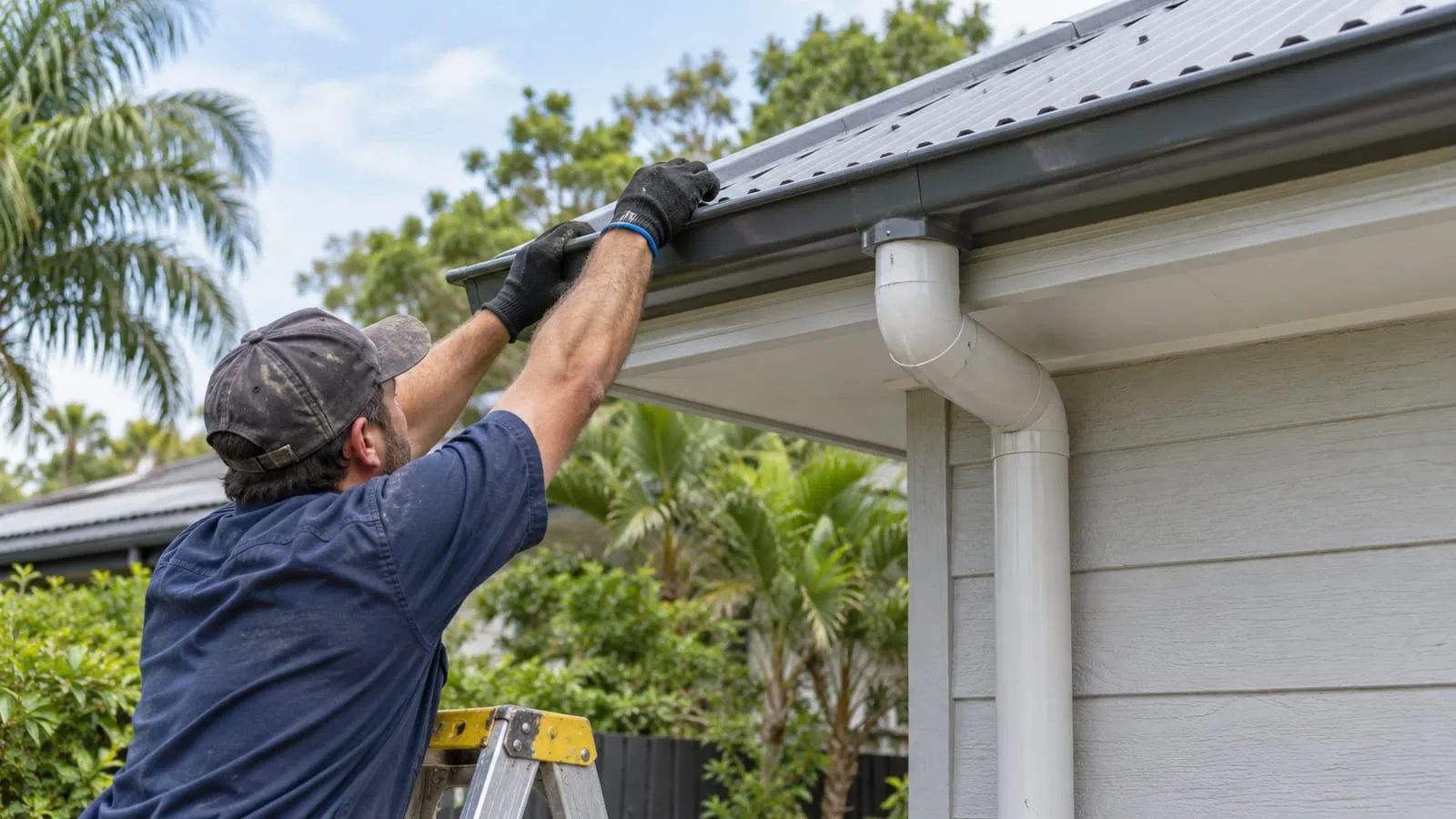
Box gutters and valleys concentrate water from large roof sections into narrow channels. When they block or corrode, water can back up under roofing and into ceilings.
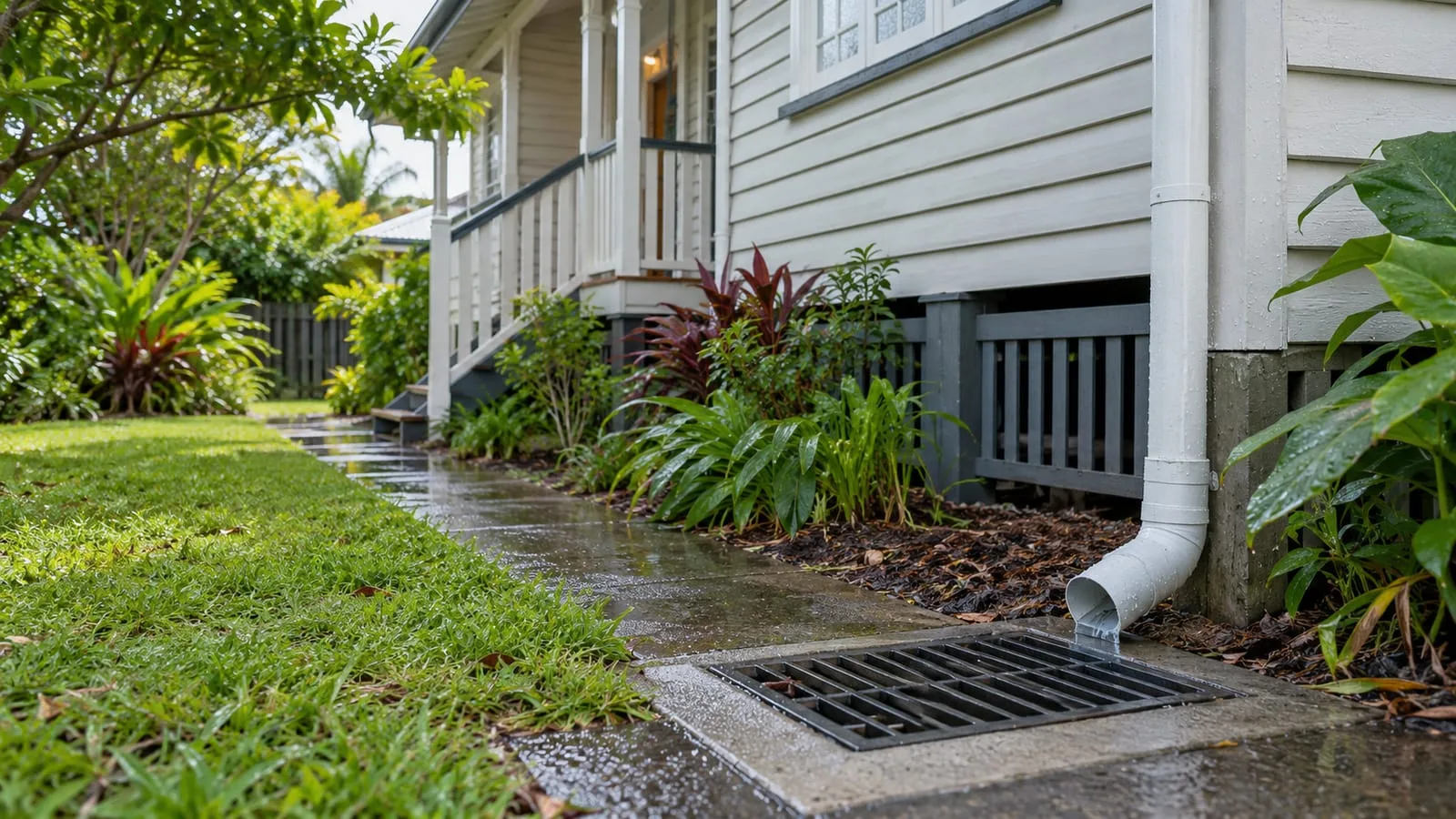
Many older Brisbane homes have box gutters hidden behind parapets or between roof sections. Rust, pooled water or sediment are warning signs, and leaks often show first as ceiling stains. Overflow relief points should be clear and working. A qualified roofer or plumber can inspect these safely. Keep trees trimmed back, because leaves and twigs accumulate faster in hidden, sheltered channels.
Box gutters can be hard to see from the ground. Ask your plumber to inspect them and photograph their condition.
Standing water, flaking paint and rust holes mean the gutter may need repair or relining soon.
A working overflow route lets excess water leave safely rather than backing up under roofing or into ceilings.
Brown rings or sagging plasterboard under valleys often show where a box gutter or flashing is leaking.
A downpipe is only as good as its connection to the stormwater system. Loose, cracked or silted connections push water back onto paths and against walls.
Trace each downpipe to see where it goes: a pit, an underground pipe, a surface grate or simply the ground. Look for damaged elbows, gaps and wet staining at the base. Where roots or silt block the line, water backs up into the downpipe. A plumber can check connections, jet lines and advise on lawful discharge. Confirm Council requirements for any changes.
Follow every downpipe to its outlet and note whether it enters a pit, pipe or discharges onto the surface.
Look for gaps, cracked elbows and staining at the bottom of downpipes, where movement and impact often cause damage.
Blocked underground lines cause water to back up in the downpipe. Ask about jetting or camera checks.
Confirm with Council or a qualified professional where roof water may legally go before changing connections.
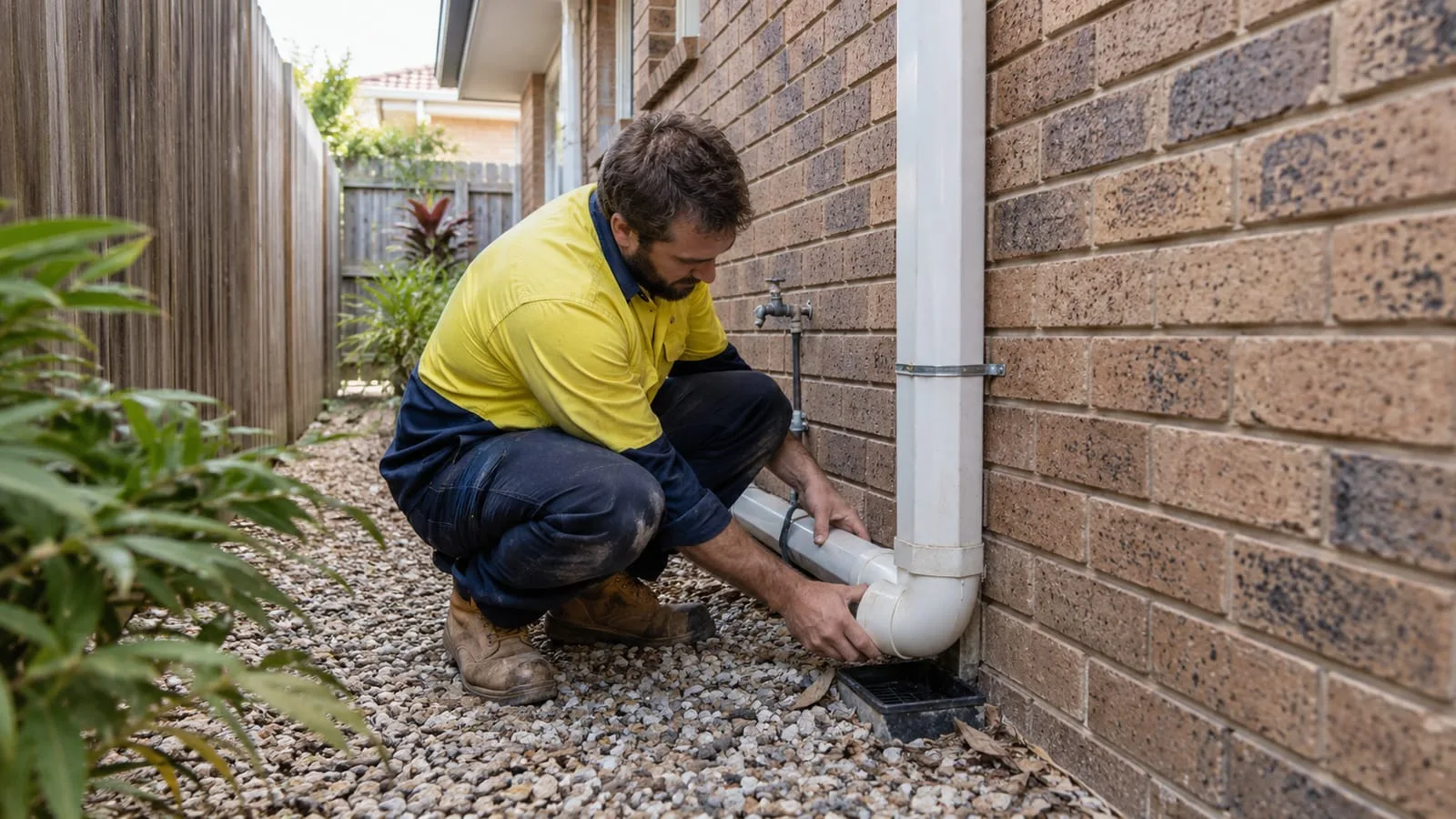
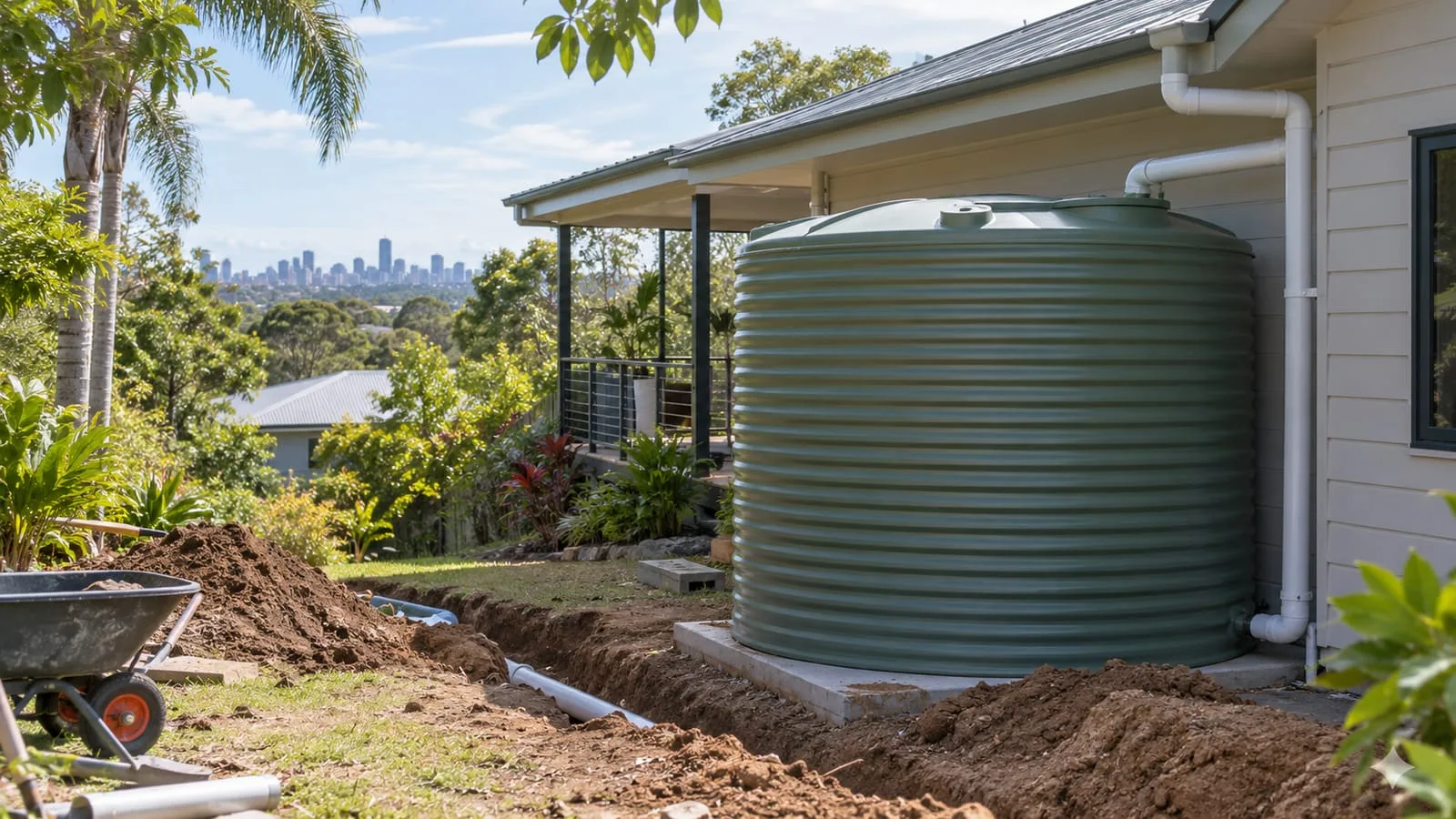
Roof water must always go somewhere safe. We install and repair downpipes, gutters and stormwater connections that carry runoff away from your home, protecting your foundations, walls, driveway and landscaping.
Roof water has to be carried well clear of the building. We install and repair downpipes, gutters and stormwater connections sized for Brisbane's heavy storms, connect them to approved discharge points and test the system before leaving, so runoff is directed away from your foundations, walls and landscaping instead of pooling where it causes damage.
Roof runoff discharging beside your house can undermine footings and cause damp. We direct it safely away through proper downpipe connections and underground drainage lines, preventing damp and structural problems.
Brisbane roofs shed huge volumes of water in heavy storms. We size and connect all pipes to handle those flows, reducing overflows, erosion and flooding around your property during storms.
We connect roof drainage to approved stormwater points in line with local requirements, helping you avoid complaints, fines and problems with neighbouring properties or council, saving you stress and expense.
We work carefully around your gardens, paving and structures, test the system before leaving and clean up, so your property is protected and looks neat, with no mess left behind.