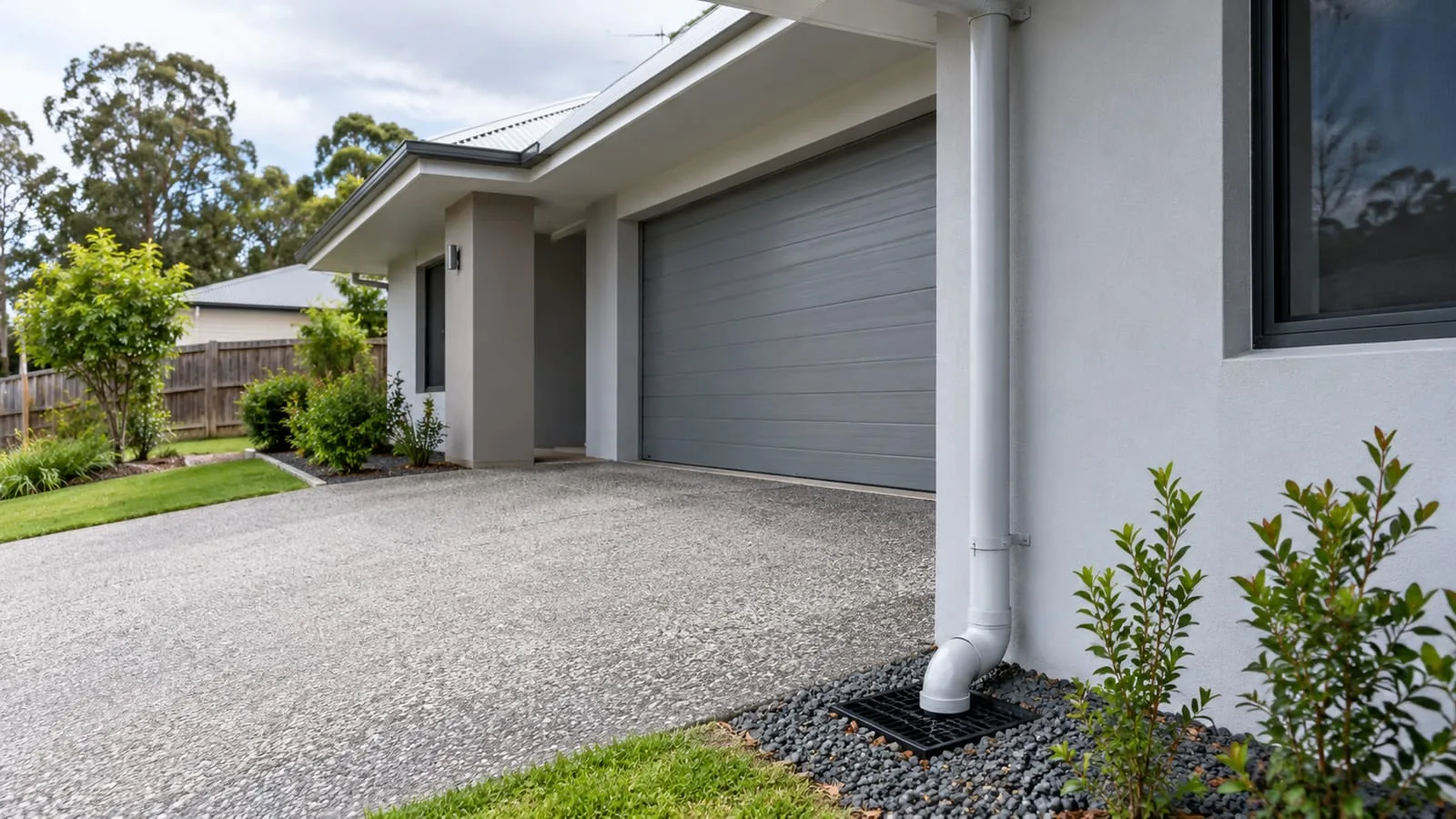
Stormwater Drainage Installation
We install stormwater pipes, pits and connections for homes, driveways and commercial sites, laying everything exactly to plan and correct falls so water leaves the property quickly, safely and reliably.


Plan underground drainage for residential builds, renovations and commercial sites across Brisbane.
Looking for plumbers and drainers in Brisbane for a new build, renovation or commercial site? Good drainage is laid out before the surface is finished, with pipe routes, levels and access points planned together so storm runoff and sewage move away from buildings reliably. Reliable drainage makes the rest of a build easier.
Underground work is difficult to change later, which is why the planning stage matters. Share your plans or describe the project, and we can help you work out how the drainage should be installed, tested and reinstated. Careful preparation helps the finished system perform well.
Explore Brisbane Drainlayers and find the right starting point for your property.
We install stormwater pipes, pits and connections for homes, driveways and commercial sites, laying everything exactly to plan and correct falls so water leaves the property quickly, safely and reliably.
We lay sewer and wastewater drains for new buildings, extensions and renovations, connecting fixtures to the network with proper bedding, junctions and inspection openings to comply with all local requirements.
We install all underground house drainage for new homes, coordinating with builders and plumbers so pipes are in place at the right time and correct levels before slabs are poured.
We replace failed or damaged drains and relocate pipes that clash with new building work, keeping your project moving and ensuring the new layout drains correctly and meets compliance requirements.
We install drainage pits, grated channels and inlets in driveways, courtyards and car parks, setting levels accurately and precisely so water enters the drain and does not pool on surfaces.
We test all completed drainage and coordinate inspections with certifiers, supplying the documentation needed so your project can progress to the next stage of construction without delay or avoidable rework.
Drains work by gravity, so the levels set before digging decide whether the system works for decades. Small errors in fall are hard to fix once pipes are covered.
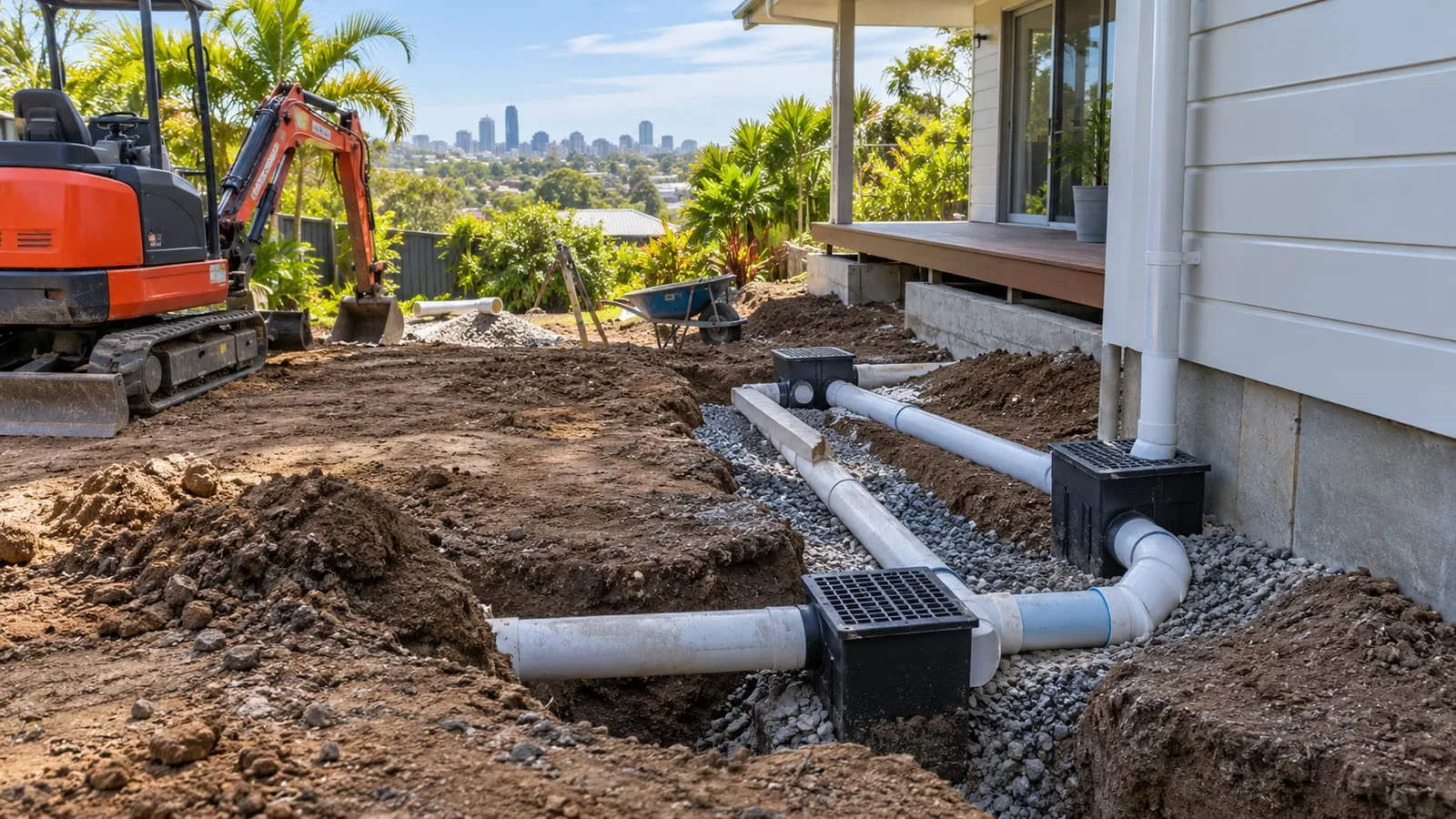
Review plans, existing ground levels and the location of the point of connection to confirm that pipes can achieve enough fall. Steep blocks help gravity but need careful management of velocity and access points. Flat or low sites may need deeper trenches or other solutions. Confirm any requirements with Council or Queensland Urban Utilities, depending on the connection.
Know where the pipe must connect and its depth, because everything upstream is set relative to that level.
Flat or low sites may struggle to achieve fall, so discuss alternatives early rather than discovering this mid-trench.
Painted lines or pegs showing pipe routes help everyone on site understand where trenches will go.
Plan inspection openings at bends and junctions, so the system can be cleaned and checked later.
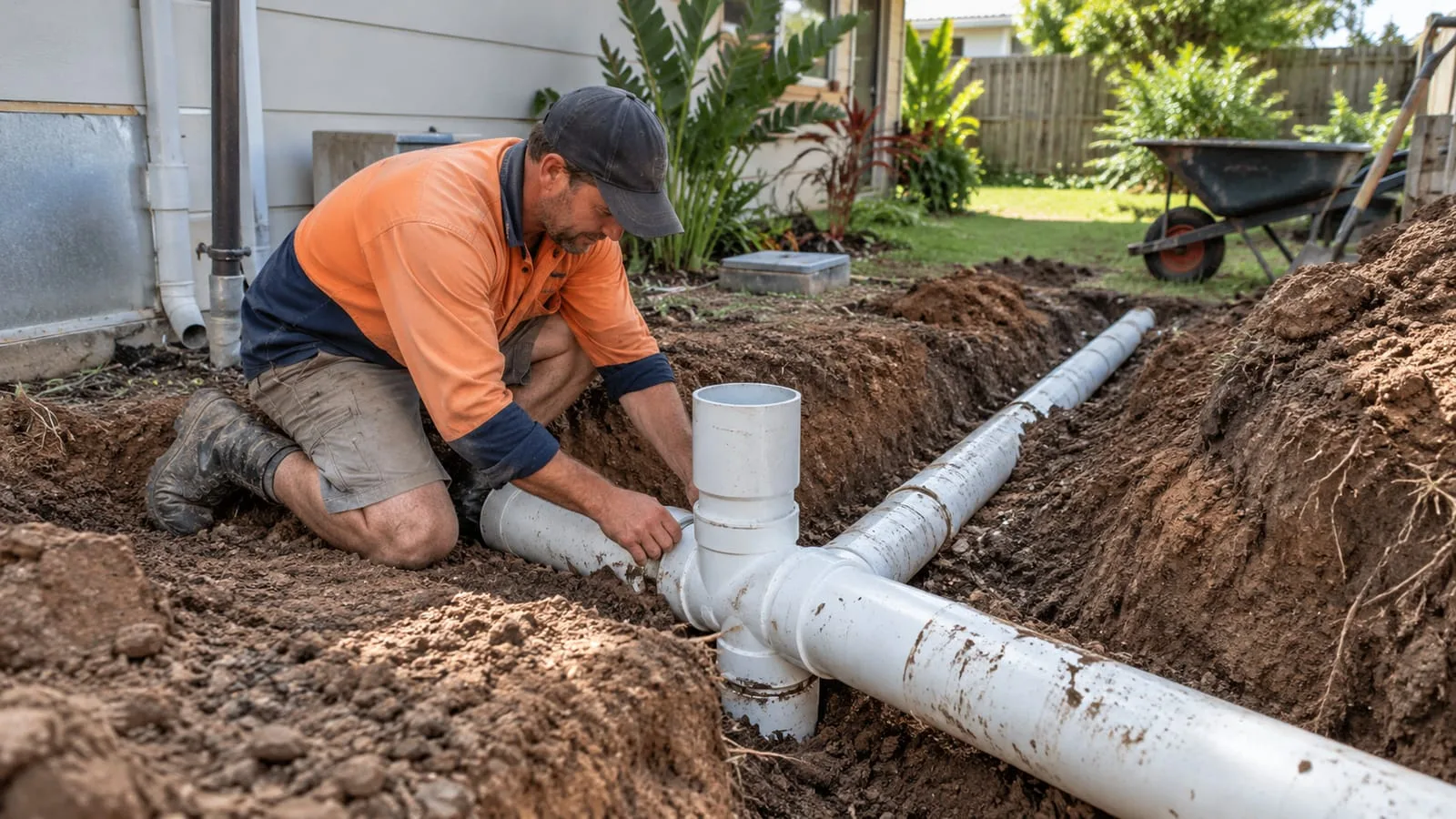
What sits around a pipe matters as much as the pipe itself. Good bedding supports it evenly, and good jointing keeps water in and roots out.
Pipes are typically laid on a prepared bed, jointed carefully and surrounded by suitable material before backfill. Poor bedding can leave pipes unsupported, causing sags and cracks as the ground settles. Ask what bedding is used, how joints are made and how the trench is backfilled and compacted. Request photos of the pipe in the trench before it is covered.
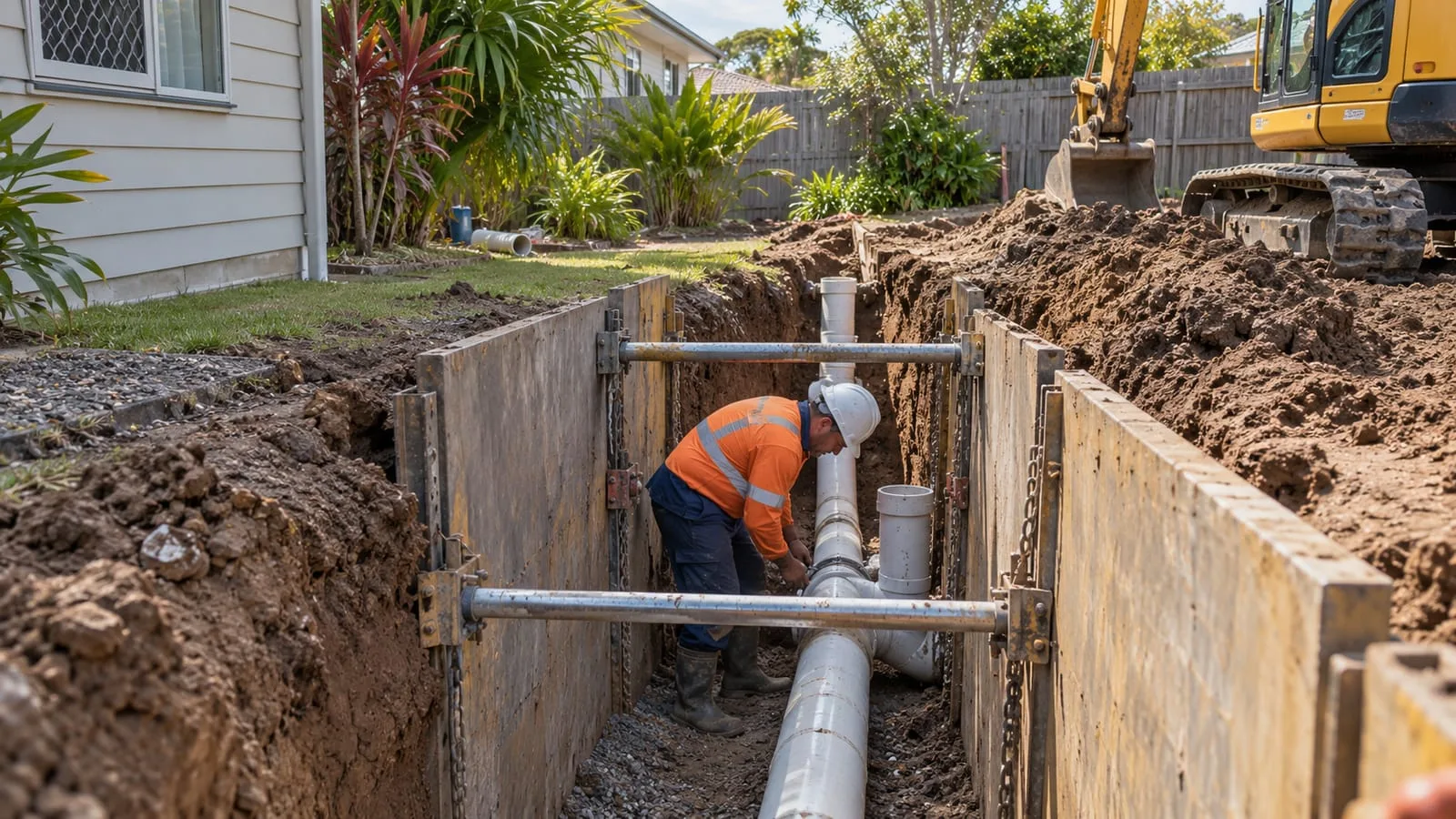
Linking a new drain to the sewer is a regulated step with its own requirements. Getting junctions and risers right makes the system easier to inspect and maintain.
Sewer connections involve junction positions, depths and approvals that vary from site to site. Confirm with Queensland Urban Utilities or a qualified professional what applies to your property, including inspection and testing requirements. Capped inspection risers let a plumber access the line without excavation later, so ask where they will sit and keep them reachable.
Sewer connections often need approvals and inspections, so confirm requirements before work starts rather than afterwards.
Check where the junction sits relative to boundaries, buildings and trees, as this affects future access and root risk.
Capped risers let future cleaning and cameras get in easily. Make sure paving and gardens leave them reachable.
Ask what testing happens before the trench is closed, so any leaking joint is found while it is still exposed.
Good drainage starts with skilled installation. Our experienced drainlayers lay stormwater and sewer pipes accurately to plan and specification, delivering compliant, long-lasting drainage systems for homes, developments and commercial sites.
Reliable drainage starts with accurate levels and compliant installation. Our drainlayers set falls carefully, lay stormwater and sewer pipes to plan and coordinate the inspections and testing your project needs, then reinstate the site neatly, so the finished system drains freely, passes approvals and avoids the recurring problems that poor installation causes.
Our team has the licences, equipment and experience to install drainage correctly and safely, working to plans and standards so your system meets Queensland requirements and performs reliably for years.
Correct gradients are essential to keep pipes flowing freely. We set levels carefully and check them regularly throughout, preventing ponding, blockages and the recurring problems commonly caused by poor installation.
We coordinate required inspections and testing and provide the necessary documentation builders and owners need, helping your project pass approvals quickly and without unnecessary delays, and giving everyone complete confidence.
We always turn up when promised, communicate clearly, manage excavation safely and reinstate the site neatly, so your project runs smoothly from the very first trench to the final backfill.