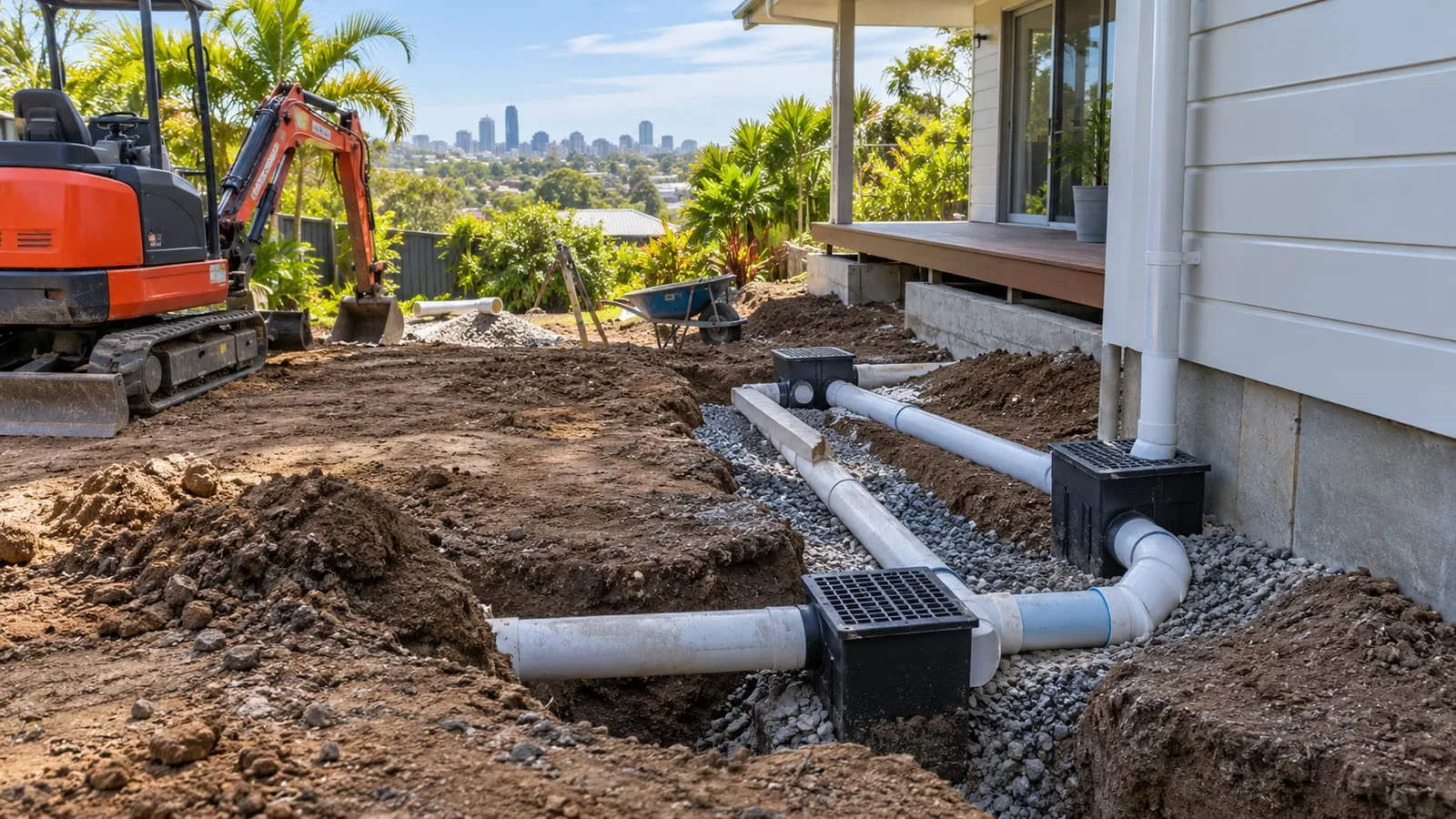
Garden Bed Drainage
We effectively drain waterlogged garden beds with subsoil pipes and gravel, helping plants establish healthy roots and preventing the soggy soil that causes dieback, fungus, root rot and poor growth.


Landscape drainage Brisbane enquiries for waterlogged lawns, garden runoff, patio collection points and drainage planned around outdoor spaces.
Landscape drainage in Brisbane needs to suit the way your outdoor spaces collect and shed water during intense summer storms. Sloping blocks, lawns, garden beds, paved areas and downpipe outlets can all contribute to the same wet patch.
Start with the flow path and the surfaces you want to protect. Surface collection, changes to levels or below-ground drainage may be considered after the source, ground conditions and receiving arrangement have been assessed.
Explore Brisbane Landscape Drainage and find the right starting point for your property.
We effectively drain waterlogged garden beds with subsoil pipes and gravel, helping plants establish healthy roots and preventing the soggy soil that causes dieback, fungus, root rot and poor growth.
Soggy, spongy lawns are fixed by installing French drains, regrading low spots and connecting to suitable outlets, helping your grass dry out faster after rain and stay green and healthy.
We install drainage behind retaining walls using quality slotted pipe, gravel and filter fabric, relieving water pressure and helping your wall stay straight, stable and free from cracking and bulging.
On sloping blocks, water can erode soil and flood lower areas. We install swales, drains and pits that control runoff across terraces, paths and steps, protecting your garden and home.
We drain courtyards, entertaining areas and pool surrounds with discreet channels, grates and pits, keeping surfaces safe, clean and dry while blending seamlessly into your existing paving and landscape design.
We connect all landscape drainage to approved stormwater outlets, kerb connections or soakwells, ensuring water leaves your garden legally and safely without affecting neighbours or damaging your home or garden.
Access, roots and finishes need to be considered. Share photographs and identify planting or paving you want to retain so the route and restoration can be discussed.
Clay soils often drain slowly, so a trench with no outlet may simply hold water. It depends on the water source and outlet arrangement. The collection method should follow an assessment rather than be assumed from the symptom alone.
Beds that slope toward a wall invite damp, mould and slab trouble. Subtle changes to garden levels can send rain away from the house without changing how the yard looks.
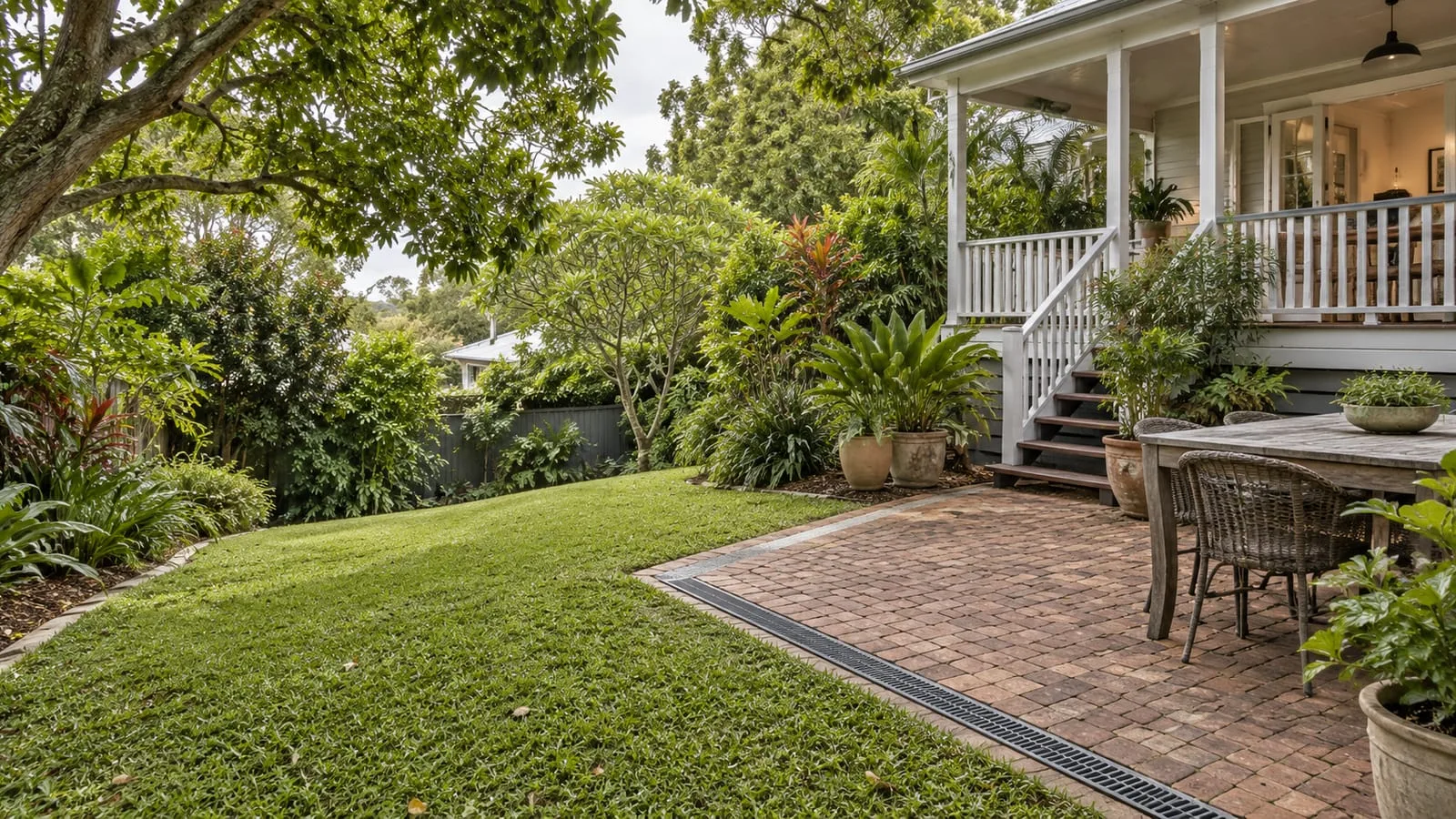
Stand outside during rain and watch where water travels. Garden beds, mulch and raised edges can dam flow and push it back against footings. A gentle fall away from the building, with clear paths to a grate, swale or approved discharge point, helps. Keep mulch below weep holes and slab edges, and check levels again after settling.
Aim for ground that drops gently away from the building rather than pooling against slab edges or stumps.
Heavy mulch piled against walls can block weep holes and hold moisture. Keep it clear of brickwork and cladding.
Observing a real downpour shows paths water takes and low spots that a dry-weather walk-through easily misses.
Make sure every garden grate or pit stays free of leaves and mulch so water has somewhere to go.
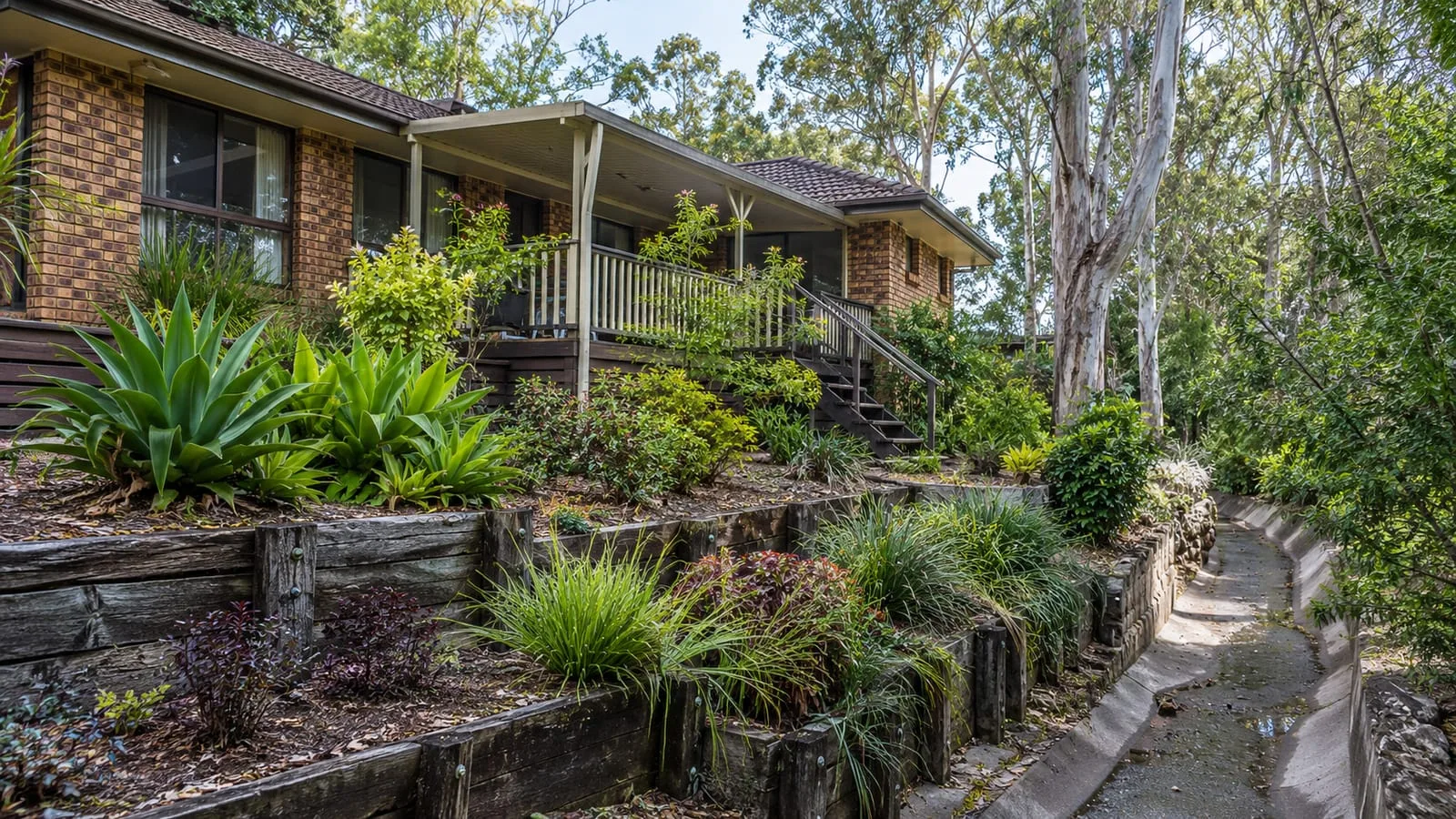
Retaining walls hold back soil, and soil holds water. Without a path for that water to escape, pressure builds behind the wall, especially during intense subtropical summer storms.
Terraced gardens on hills-edge Brisbane blocks often rely on retaining walls to create flat areas. Ask whether walls have drainage behind them, such as agricultural pipe, gravel and outlets, and where that water is meant to go. Look for weeping stains, bulging or leaning sections, and soil washing through joints. Raise concerns with a qualified professional early.
A soakaway pit lets collected rainwater infiltrate the ground slowly instead of racing across the yard. In reactive clay it needs careful thought, and sometimes a different approach altogether.
Slow-draining ground can limit what a soakaway pit achieves, and positioning matters. Keep pits well away from house footings, boundaries and neighbouring structures, and make sure overflow has a safe route. Ask your plumber or drainer how the design suits your soil and whether Council requirements apply. Inspect lids after storms and clear silt, since sediment steadily reduces how well they work.
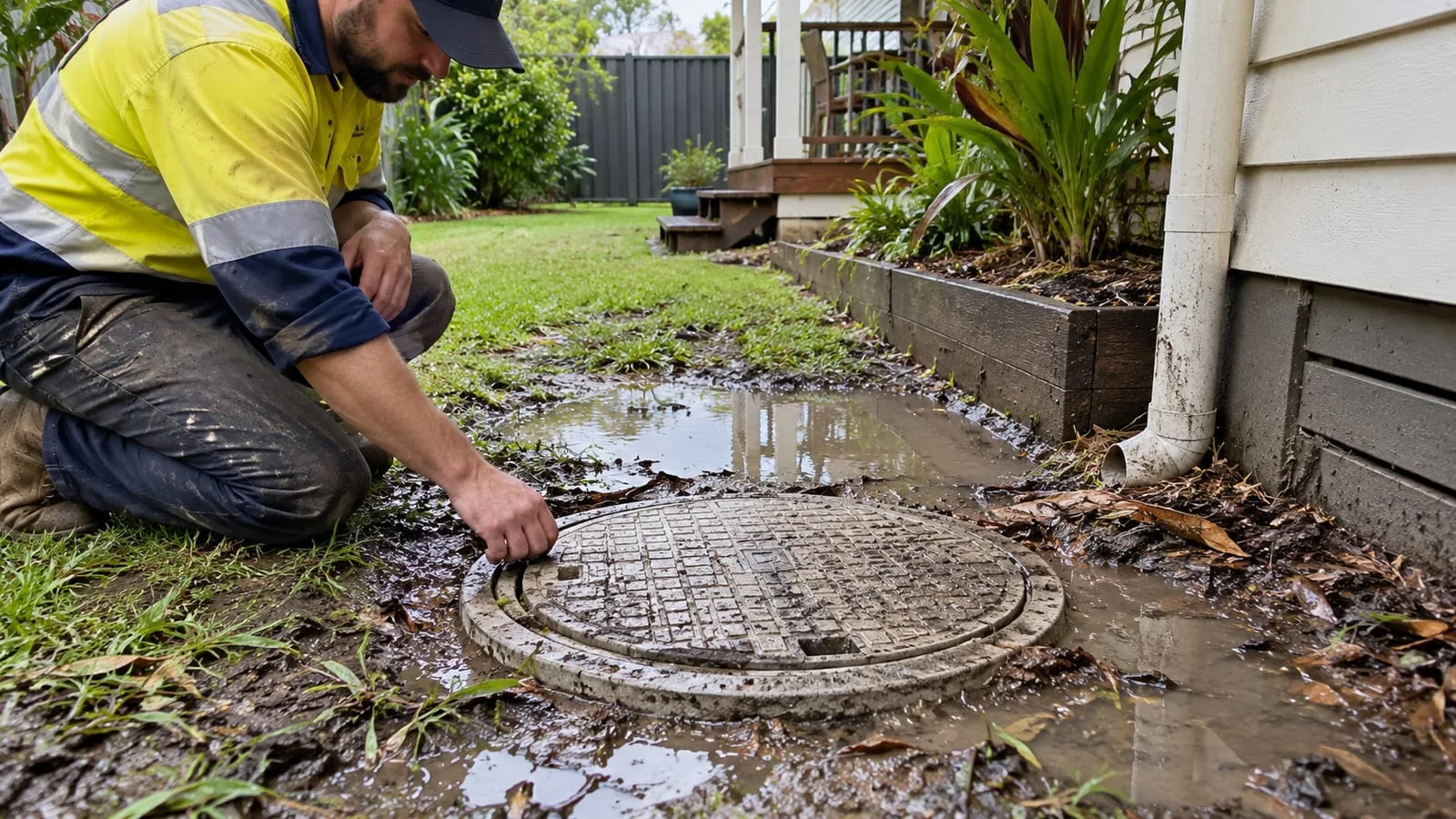
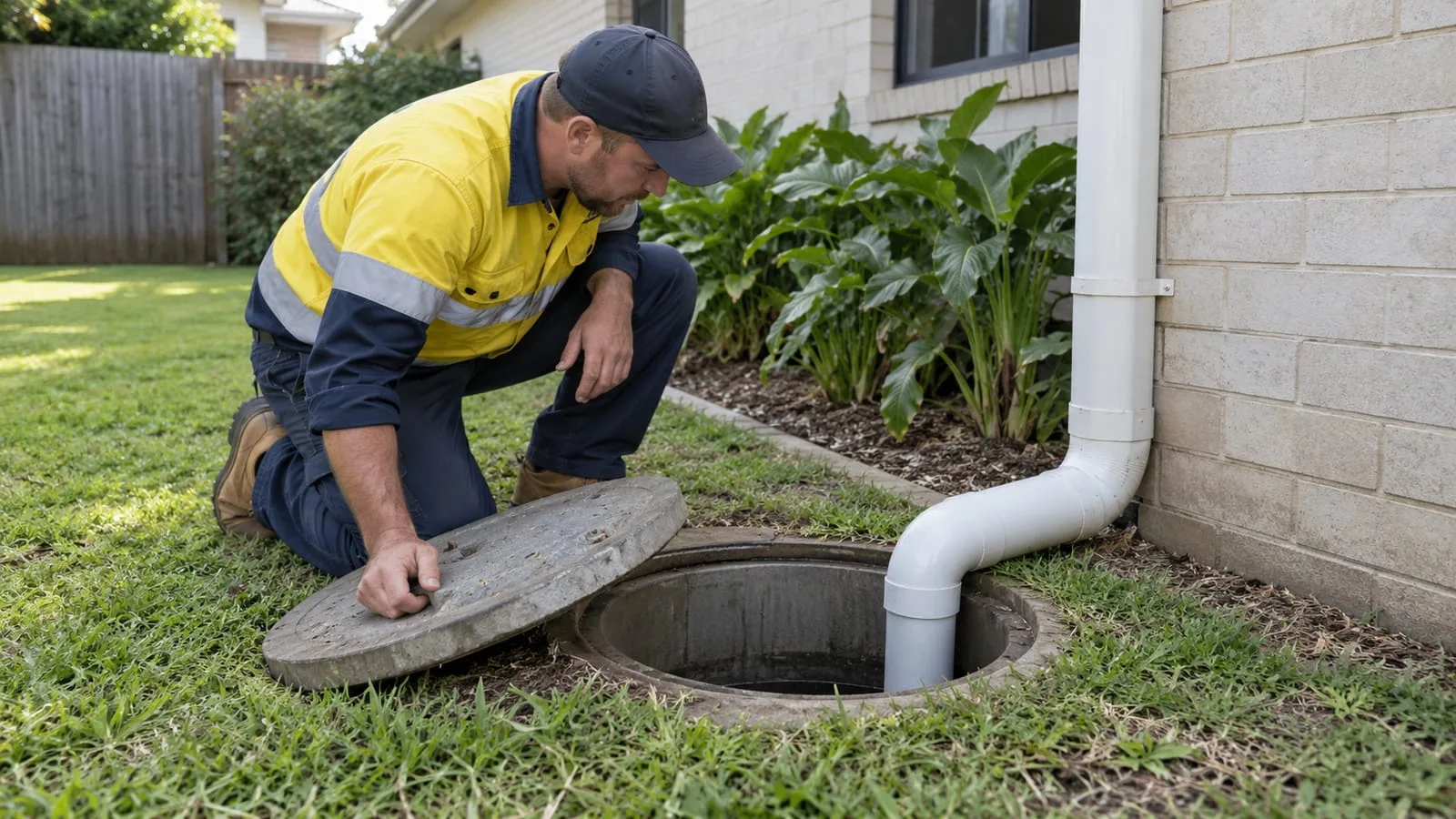
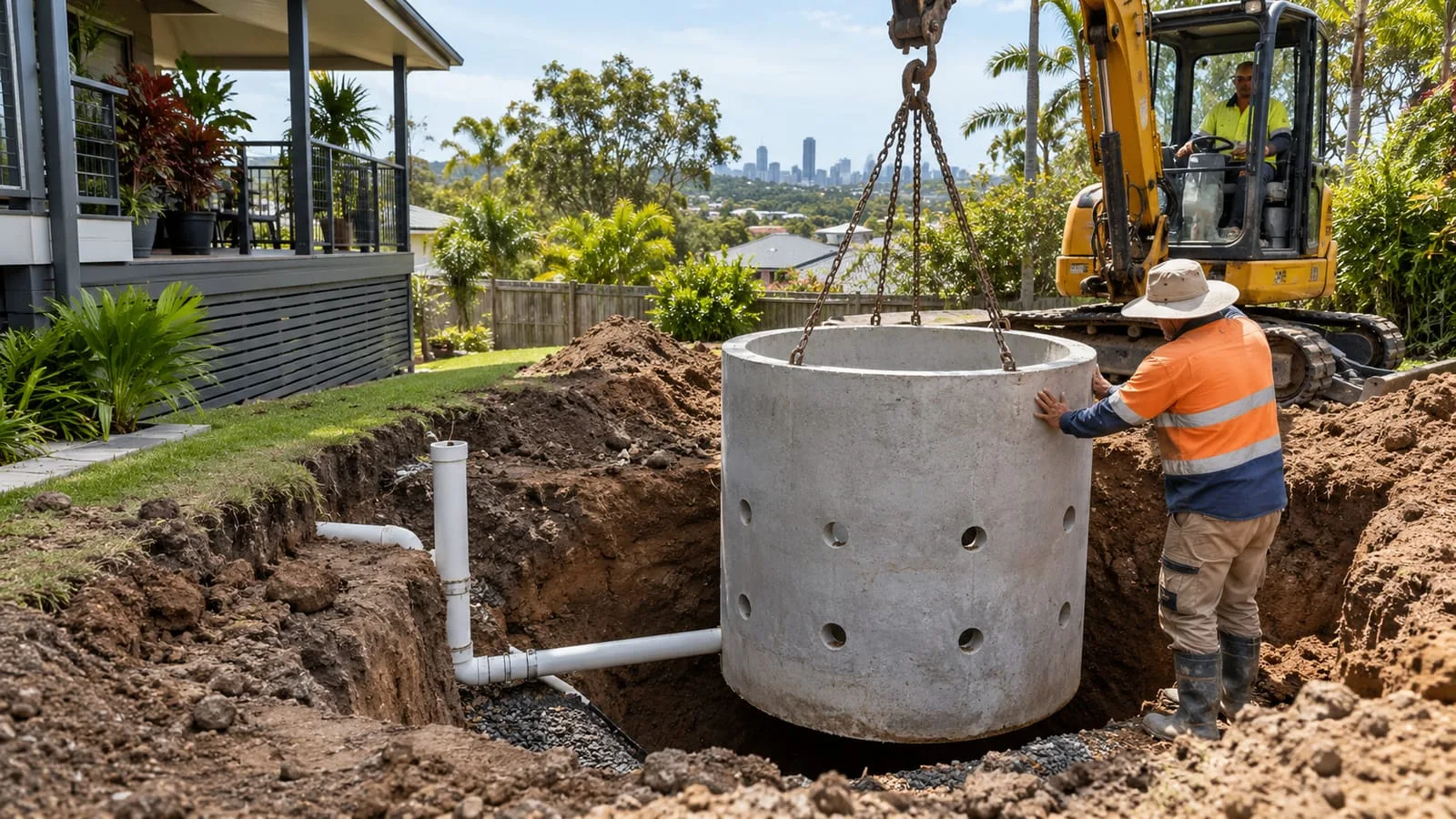
Soggy lawns and flooded garden beds ruin outdoor spaces. Our landscape drainage systems move water away efficiently, protecting your plants, paths and entertaining areas while keeping your garden looking great.
A garden drainage system should work hard without spoiling the look of your outdoor space. We assess how water moves across your site, install pits, pipes and channels discreetly around existing planting and hardscape, and direct runoff to an approved outlet, so lawns and beds stay healthy through Brisbane's hot, wet summers instead of turning to mud.
Good drainage prevents waterlogged soil, root rot and erosion, helping lawns, trees, shrubs and garden beds thrive through Brisbane's hot, wet summers instead of washing away or turning to mud.
We install pits, pipes and channels discreetly and neatly, working carefully around your existing landscaping and hardscape, so your drainage works hard without spoiling the look of your outdoor space.
Our systems are carefully designed for intense subtropical summer downpours, directing runoff to approved legal discharge points and keeping water well away from your house, retaining walls and neighbouring properties.
We work carefully around trees, irrigation and existing structures, restore lawns and surfaces after installation and explain exactly how your new drainage system works and how to easily maintain it.